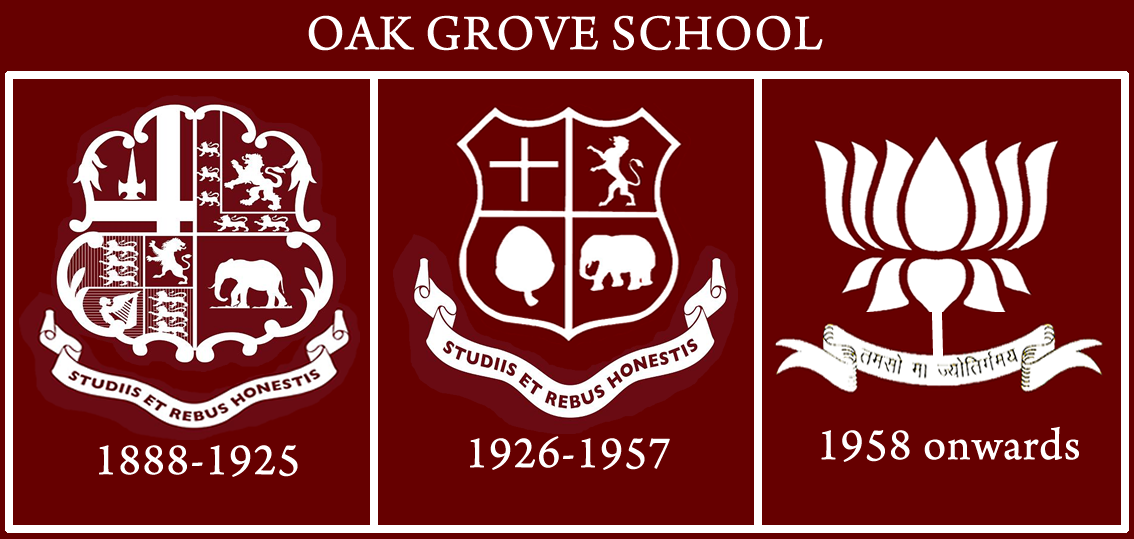
The Chronicles of Oak Grove – Jharipani &
Mussoorie Sport
With Historical Archives and Contributor Records – Part 3
Sameer Mahindru | Virender Gupta | Late Anil Edwards | Patrick Corbett (courtesy of Ms Sheila Cameron)
Contents
- Part 1: The Chronicles of Oak Grove (Authored by Sanjeev Meston)
- 1.1 Lesser-Known Facts about Oak Grove School
- 1.2 Memories of the Era
- 1.3 Mussoorie — Where Two Great Legacies Meet Again
- 1.4 Sport and Sporting History in Mussoorie Hills
- Part 2: Archival Records & Historic Timelines
- 2.1 The Beginning of Oak Grove School
- 2.2 The Official Account of the Hill School (Circa 1905)
- 2.3 The Farrington Prehistory & Plaque Restoration
- 2.4 The Genesis: East Indian Railway Hill School Logbooks (1888-1889)
- 2.5 The Institutional Blueprint: Analysis of the 1913 Prospectus
- 2.6 The Historical 1913 Book & Sundry Cost Manifest
- Part 3: Contributed Memoirs & Unaltered Transcripts
- 3.1 Appendix A: Sameer Mahindru’s Contribution
- 3.2 Appendix B: Virender Gupta’s Account
- 3.3 Appendix C: Late Anil Edwards’s Contribution
- 3.4 Appendix D: Account by Mr Patrick Corbett
- Principals’ Timeline of Oak Grove School
Part 1: The Chronicles of Oak Grove (Authored by Sanjeev Meston)
1.1 Lesser-Known Facts about Oak Grove School
Oak Grove School, Mussoorie — a name that echoes through generations — holds countless stories tucked away in its hills and halls. Here are a few lesser-known glimpses into this remarkable heritage:
- Numbered Buildings: Every old building at Oak Grove was originally numbered in the order it was built. Sadly, newer buildings don’t carry this tradition, and some older ones lost their numbers due to later extensions and renovations.
- Rifles, Horses & Remembering Alok: In the 1920s and 30s, rifle shooting and horse riding were compulsory — and beloved — sports. Horses were kept in stables right next to the shooting range, which was later used for NCC rifle training. In 2004, a tragic accident during training took the life of Alok Ranjan. Today, a soccer tournament is held every year in his memory.
- The DODGE Power Wagon: Until the late 1970s, Oak Grove’s official school van was a rugged DODGE Power Wagon, fondly remembered as it ferried generations of students. Many still recall Mr. Bhag Singh at the wheel!
- Hands-On Learning: Oak Grove once taught carpentry and automobile technology. A stripped-down bus chassis sat outside HMBS’ office till the late 70s — a living classroom. Students also learned printing on a real machine, using lead type cartridges to set text by hand.
- Sports Carnivals & the MSSA: Oak Grove hosted grand annual Boxing and Swimming Carnivals, with Wynberg Allen and St. George’s College as regular participants. These traditions gave rise to the Mussoorie School Sports Association (MSSA), which organized inter-school sports until it folded in 1989. Many Oak Grovians still remember the fierce competition and unforgettable memories.
- From Senior Cambridge to CBSE: In 1975, Oak Grove switched from Senior Cambridge to ICSE/ISC, and then in 1978 to CBSE. This shift brought a 45-day summer break to match exam schedules — which meant no soccer tournaments for a while. Today, with shorter breaks, Oak Grove teams compete actively again, including in the Jackey Tournament at St. George’s, held in memory of Jitender Gupta, who tragically passed away during his training at the IMA. His mother, Mrs. Gupta (HMGS), also lost her eldest son in the 1971 Indo-Pak war — a testament to the deep and sometimes painful history Oak Grove shares with its community.
These forgotten facts remind us that Oak Grove isn’t just a school — it’s a living legacy of stories, memories, and bonds that continue to shape every Oak Grovian.
1.2 Memories of the Era
We were in an era, when for just over an aarzee, we could watch a movie in the bhuts class. Standard bakery and Moula sold a pastry for an aarzee. A movie, a dosa at green’s or Aaloo poor at Sindhi and a pastry was our Muss trip.
Run back to school after the movie to make it in time for the roll call before washes, or get dhunned by the POD / MOD. The boys who were gated from exeat (Mussoorie trip), would spend the day in preps or fagging at the Tennis courts.
Those were the days my friend, we thought that they’d never end, but they ended too soon. The life in the confines of OGBS /GS/JS were the best memories some of us created.
Some events we can never forget:
- When the water supply line from the streams burst, and we were without water for a week.
- The two bushfires, when we actually used the fire hydrants, the fire hose and the big bell was sounded. The bell was heard both in Mussoorie and Rajpur.
- The fire in Jharipani (the bakery went into flames).
- The 1976 Interschool Hockey final that was played over 3 days. Whole of OGBS, staff including kitchen and ancillary went to cheer the team. The game was eventually decided by penalty strokes as tie breaker in 5+3 strokes each. Fortunately the game went in our favour. Both OG and SGC played great hockey. Our Mr Luther gave a glorious tribute to the heroes of the team in HT and Vanguard.
- The beginning of the Athletics season with the obstacle race as the first PD event.
- The annual GK test on the 1st September each year.
- The 10 point declamation.
- Escapes to Ganji pahari.
- NCC rifle shooting at the stables (It stopped when in the late 90s an accident resulted in a school student unfortunately losing his life in a misfire while clearing the guns).
I have an endless volume of memories some very good, some good and of course some not as good etched in my 62 yr old brain.
1.3 Mussoorie — Where Two Great Legacies Meet Again
The year 2025 marked a truly special moment in the hills of Mussoorie. Two of its finest institutions — Wynberg Allen School, Bala Hissar and Oak Grove School, Jharipani — both founded in 1888, celebrated their Alumni Reunions. Wynberg Allen in October and Oak Grove in November.
Hundreds of past students made their way back to the mountains — to walk once again on familiar paths, revisit dormitories and playgrounds that echoed with laughter, and shared memories that time can never erase. They came from different corners of the world and represented generations of Mussoorie’s proud educational heritage — united by their love for their alma mater.
For me, this is deeply personal. Having had a close association with both Oak Grove and Wynberg Allen, these institutions are not just schools — they are living chapters of my own story. Their traditions, teachers, friendships, and values have shaped countless lives and continue to inspire new generations.
It is truly heartening to see both schools thriving — still upholding their founding ideals of excellence, discipline, and character. My heartfelt thanks to the principals, teachers, staff, and alumni committees who have worked tirelessly to keep the flame of these institutions burning bright.
Although I was unable to attend the reunions in 2025 due to other commitments, my thoughts, best wishes, and pride traveled up the hills with you all. May any future reunions be filled with laughter, shared stories, gratitude, and renewed bonds.
Here’s to Wynberg Allen and Oak Grove — two pillars of education that continue to define the spirit of Mussoorie, the Queen of the Hills.
1.4 Sport and Sporting History in Mussoorie Hills
Congratulations to Wynberg Allen School on finally capturing the elusive Jackie Soccer Tournament title — a victory decades in the making. Despite numerous appearances in the finals, the crown had always slipped away. This time, however, perseverance, skill, and unyielding determination have triumphed.
However, as I celebrate Wynberg Allen’s success, I must also express my deep unease at how the tournament’s heritage is being framed. Officially, the event has long been titled The Jackie Tournament, with this year marking its 52nd edition under that banner. But to generations of players, alumni, and townsfolk, it has always been — and will always be — the Jackie Tournament. Now, I see it being referred to as 52nd edition of the Heritage cup.
The Jackie Tournament was born from a deeply human story of sacrifice, honour, and remembrance. It was named after Jitendra “Jackie” Gupta, a remarkable athlete and footballer, who tragically lost his life while training at the Indian Military Academy in Dehradun in March 1972. During a training session in the Yamuna River, he drowned — an unimaginable loss that came exactly four months after his brother, Ravinder Gupta, laid down his life in the Indo-Pak War of December 1971, on the very last day of the conflict.
Both young men were the beloved sons of Mrs Gupta, the esteemed Headmistress at Oak Grove – Junior School. Jackie himself began his schooling at Oak Grove before later attending St George’s College, which became the proud host of the tournament named in his honour. To gradually allow the “Jackie” name to fade is to diminish its rich sporting heritage and obscure the memory of Jitendra’s personal achievements and the profound sacrifice his family made for the nation.
This shift also rekindles the sadness of losing the Mussoorie Schools Sports Association (MSSA) in 1992 — a loss that many still feel deeply. The MSSA was a cornerstone of Mussoorie’s sporting culture, bringing together schools in the region for athletics meets and inter-school competitions that were run with professionalism, camaraderie, and fierce but respectful rivalry.
The on-field rivalries it nurtured were the heartbeat of the hill station’s sporting identity. The Ahmed brothers (Furqan, Salim, and Shahid of Oak Grove), the celebrated Purewal–Anand Singh rivalry, the brilliance of Champa Namgyal, Champa Dhakpa, Ajay Mark, the Alter brothers, Patiyasevi, Rashid Ahmed, Arvind Popli, Manish John, Gurinder Pal, and Peter Carlyle — these names were not merely participants, but legends etched into Mussoorie’s collective memory.
Olympians from Mussoorie Schools
Oak Grove School:
Broome Eric Pinniger — Vice-captain, India Hockey, 1928 & 1932 Olympics (gold medals).
Leslie Charles Hammond — Defender, India Hockey, 1928 & 1932 Olympics (gold medals).
Richard James Allen — Goalkeeper, India Hockey, 1928, 1932, 1936 Olympics (three golds; conceded only two goals in 10 matches).
Richard John Carr — Forward, India Hockey, 1932 Olympics (gold medal).
St George’s College:
William Goodsir-Cullen — India Hockey, 1928 Olympics (gold medal).
Ernest Goodsir-Cullen — India Hockey, 1936 Olympics (gold medal).
George Eric Marthins — India Hockey, 1928 Olympics (gold medal).
Michael Gateley — India Hockey, 1928 Olympics (gold medal).
Carlyle Tapsell — India Hockey, 1932 & 1936 Olympics (gold medals).
Lionel Emmett — India Hockey, 1936 Olympics (gold medal).
N. Nugent — Represented Great Britain, 1952 Helsinki Olympics (bronze medal in hockey).
Wynberg Allen School:
Emily Davenport — Represented India in athletics; a trailblazer for women’s sport from Mussoorie.
Sporting glory in Mussoorie was never confined to schools alone. The town itself pulsed with athletic energy, especially during the Autumn Festival sporting events, which drew talent from across North India. I still recall one particular race in which, much to everyone’s amazement, a worker from Barlow Bakeries stormed through the competition to claim victory — a reminder that Mussoorie’s spirit for sport cut across every walk of life.
The hill station also enjoyed a reputation in disciplines far beyond the mainstream. In its heyday, Mussoorie boasted the finest indoor roller-skating rinks in the country, producing many of India’s top skaters. Among them, Ashok Pal Singh — an acclaimed artistic and figure skater — deserves special recognition, not only for his personal achievements but also for later leading the Roller Skating Federation of India. Roller hockey, too, found a champion in Mussoorie through Nand Kishore, fondly remembered as “Bamboo,” who went on to serve as an Olympic referee and international panellist.
What made these achievements even more remarkable was the terrain. Cricket, hockey, soccer, and athletics were almost always contested on rough gravel and bajri grounds — unforgiving surfaces where scraped knees were part of the game. Yet when Mussoorie teams stepped onto lush grass fields, often for the very first time, they displayed an adaptability and fighting spirit that saw them outplay hosts like The Doon School, RIMC, Colonel Brown, St Joseph’s, Welham Boys, and Cambrian Hall on several memorable occasions.
It was not just grit but also innovation that set Mussoorie apart. In 1976, during a MSSA athletics meet, a student stunned the local crowd by attempting the then-revolutionary Fosbury Flop high jump technique — the first time it was ever seen on Indian soil. Until then, the straddle and the roll had dominated, but in that moment, Mussoorie became the unlikely stage for the arrival of a technique that would redefine the sport forever.
Another distinctive feature of Mussoorie’s sporting culture was the excellence of its teachers. Many PE instructors were themselves former students — seasoned sportsmen who passed on both skill and passion to the next generation. Vernon Shepherd, Brother William, Satish Singh, Ajay Mark, Manish John, and Champa Dhakpa all come to mind, while Woodstock could proudly claim Andy Matheson, a formidable talent in hockey, cricket, and soccer.
If I may indulge in a personal note, my own love for sport owes much to my years in Mussoorie. I had the privilege of captaining my school’s victorious cricket team, while also competing with some success in cross-country and middle-distance running. I was fortunate to win medals in those races, including the first — and only — edition of the 5000m track event. Those foundations later carried me to St Stephen’s College, where I captained the cross-country team, participated in Delhi State and University meets, and even clocked 2 hours 48 minutes to finish 18th in the second edition of the Rath Indian Open Marathon.
Such stories were far from unique. Almost every Mussoorie school student seemed to excel in not one but three or more sporting disciplines. This breadth of talent and dedication was — and remains — a hallmark of the town’s sporting identity.
Where Champions Found Their Stride: Mussoorie’s Sporting Heritage
Mussoorie has always been more than just a hill station—it has been a cradle of sporting excellence, nurtured by the quiet dedication of teachers, mentors, and enthusiasts who gave far more than their job descriptions demanded.
David Inglis, himself a gymnast and boxer of repute, stood tall among them. Featured in the Ring Magazine for his boxing prowess, Inglis was a rare blend of grit and grace.
Vivian Maurice Alexander, an entertainer both on and off the cricket field. His flamboyant style found its counterpoint in his adversary and friend, Brij Lal of Woodstock.
Arthur Houghton had a different gift—he believed in starting young. Whether it was hockey, cricket, or soccer, he poured his energy into coaching the juniors.
Hugh Bradby, despite the heavy mantle of Headmaster and later Principal, was never too far from a game. Derek Swing, meanwhile, imposed discipline and sporting etiquette with a firmness that made boys and girls alike understand the deeper value of the games they played.
In hockey, S.P. Luther stood out—a player of quality who later chronicled the sporting life of Mussoorie in the local papers. A.L. Meston, my own father, wore his hockey colours with pride, coaching with the same passion he once played with. B.N. Khanna, who came to the game after beginning his career as a teacher, blossomed into one of Mussoorie’s most respected coaches and referees.
St. George’s had its own stalwarts—Mr. Wood and Mr. Wilson, inseparable mates and deeply admired PE teachers. And at Hampton Court, Mr. Gordon became a household name, coaching tirelessly even as he battled cancer, working until the age of 80.
Andy Matheson came to Woodstock as a staff member, but quickly made his mark as both sportsman and coach. Others like Roop Chand of Mussoorie Public and Vijay of Mussoorie Modern deserve mention too.
And then there are the names that remain etched in Mussoorie’s collective memory—Ajay Mark and Champa. Still residents of the town, their influence continues. Champa, in particular, defies time itself—still running, still playing, still inspiring, long after the age most would have slowed down.
Vernon Shepherd, who shouldered the task of following Mr. Wood, did so with distinction, becoming a beloved mentor in his own right. He was ably supported by the evergreen and multi-talented Brother William, whose contribution to Mussoorie’s sporting story is beyond measure.
These were the men who kept Mussoorie’s sporting banner flying. Through their efforts, our schools and fields produced not just athletes, but people of character, pride, and discipline. Their legacy remains alive every time a game begins on the hillside grounds of Mussoorie.
Part 2: Archival Records & Historic Timelines
2.1 The Beginning of Oak Grove School
Perched amidst the mist-laden hills of Mussoorie, surrounded by towering oaks and whispering pines, Oak Grove School emerged from a remarkable convergence of three defining gifts of the nineteenth century — the railway, the hill station, and the great public-school tradition of the British Empire.
The coming of the railways transformed not only transport and commerce across India, but also the lives of thousands of railway employees and their families. At the same time, hill stations like Mussoorie had become sanctuaries from the scorching plains — places of cool climate, health, and education.
Long before Oak Grove formally came into existence, the seeds of railway education had already been planted nearby. In the 1870s, the Sind, Punjab & Delhi Railway — later the North Western Railway — established a modest hill school at a bungalow called Fairlawn, close to the present Oak Grove estate. The property formed part of the historic “Rajah’s Palace,” once associated with the Royal Family of Nepal.
In 1888, the East Indian Railway Company took a bold and unusually philanthropic step. The Company soon acquired the beautiful and secluded “Oakgrove” estate, a wooded property of nearly 193 acres situated at an elevation of over 5,300 feet above sea level. The school officially began functioning on 1 June 1888, when twenty-eight boys arrived.
The earliest days of the school were marked by dedication, determination, and pioneering spirit. On 9 May 1888, the school’s first officials — Matron Mrs. Green and Sergeant Mr. Green — arrived. Shortly afterwards, on 19 May 1888, Head Teachers Mr. and Mrs. A. C. Chapman took charge. Over the next twenty-four years, the Chapmans would guide the young institution through its formative struggles.
The first school building — today’s historic Boys’ School — was designed by the East Indian Railway’s Chief Architect, Mr. R. Roskell Bayne, and constructed under the supervision of Company Engineer Mr. W. Drysdale. By November 1888, the building was formally handed over.
Oak Grove grew steadily in both size and reputation. In 1890, a Cadet Company was formed. Urdu and Latin soon entered the curriculum. An infirmary was established, while sports, swimming, rifle training, and outdoor life became integral parts of the Oak Grove experience.
The nearby Fairlawn School eventually merged with Oak Grove in 1894. By the close of the nineteenth century, Oak Grove had already established itself as a thriving railway institution serving children from both the East Indian Railway and the North Western Railway systems.
2.2 The Official Account of the Hill School (Circa 1905)
The following is extracted from an official East Indian Railway Company report or gazette, providing the definitive corporate history of the school’s founding and financial structure.
In 1888 the first portion of the Company’s hill school at Mussoorie was opened. This school which has since proved a great benefit to the Company’s employees, is not intended for the education of the children of servants of the superior grade but for the children of those who, by reason of their position in the service, lack the means of sending them to be educated in England.
On the purchase of the undertaking by Government on 1st January, 1880, it was found that a sum of over four lakhs of rupees remained at credit of the Saving Bank and Fine Funds. It was decided to devote these monies to the provision of a school in a temperate climate for the education of the children of the European and Eurasian employees.
The results obtained by the North-Western (State) Railway from an experiment made at “Fairlawn” near Jherapani attracted enquiries to that locality. “Oakgrove,” a well-wooded and secluded estate, comprising 193 acres of land, was purchased for Rs. 30,000. In June 1888, the school was opened with a capacity for 210 pupils, having cost with the estate a sum of Rs. 200,000.
The Board set apart a further sum of Rs. 200,000 as an endowment towards payment of the Teaching Staff. The scale was fixed at Rs. 14 for the first child, Rs. 12 for the second and Rs. 10 for the third and other children per mensem.
In 1895 applications exceeded the limits. It was decided to purchase the adjoining “Jharipani” estate (52 acres) and build a separate school for girls, opened in April 1897. The total expenditure on the entire school, including the Hospital and Sanitarium, Swimming Bath and Bakery, was Rs. 500,000 including the endowment.
In 1905 the school had an average resident attendance of 394 pupils. The standard of education has been well maintained throughout. The pupils have taken a high place, and on more than one occasion the first place on the Government examination lists for the whole of the United Provinces.
From the same official source, the following further historical account is recorded:
Oak Grove School was the product of coming together of three of the greatest gifts of the Nineteenth century — Railways, Hill Station and Public School Culture — all blending harmoniously in this institution. The first Railway hill school was started in the 1870s by SP&D Railway later known as North Western Railway at a Bungalow called FAIRLAWN.
Oak Grove School was started in 1888 by the East Indian Railway Company with an endowment fund of Rs 2 lac. The first school building, the present Boys’ School, was designed by Mr. R. Roskell Bayne. The earliest recorded history mentions the arrival of Matron and Sergeant Mrs. and Mr. Green on 9th May 1888, followed by Head Teachers Mrs. and Mr. A. C. Chapman on 19th May 1888.
Key Dates:
01/06/1888 – 28 boys arrive.
23/11/1888 – Building taken over from Distt Engineer Drysdale.
09/08/1889 – Rash Behari Ghosh, native doctor, arrived.
02/06/1890 – Formation of Cadet Company including 12 boys from Fairlawn.
07/08/1891 – Munshi appointed to teach Urdu.
11/09/1891 – Latin started for class VI to VII.
16/10/1891 – Decision to open an infirmary.
2.3 The Farrington Prehistory & Plaque Restoration
Before the iron rails of the East Indian Railway reshaped the topography of Jharipani, the foothills were defined by early colonial estates. Central to the pre-institutional history of these lands is the lineage of Sir Charles Henry Farrington, Bart., a Captain in His Majesty’s 31st Regiment of Foot. He departed this life on 26th March 1828, in the 35th year of his age. His memorial plaque was restored in 2011 through a joint effort by Oak Grove School and the Farrington Family.
2.4 The Genesis: East Indian Railway Hill School Logbooks (1888-1889)
- May 9, 1888: Arrival of Discipline Sergeant Green and Mrs. Green (Matron).
- May 19, 1888: Head Teachers Mr. A. Chapman and Mrs. H. C. Chapman arrive.
- May 21, 1888: Mr. E. J. Clarke arrives as Assistant Master.
- May 26, 1888: First shipment of administrative tools arrives by post.
- June 1, 1888: Twenty-eight boys arrive.
- August 3, 1888: Evening suppers halted; sweet puddings reduced.
- September 14-21, 1888: Boy named Thomas suffers fever relapse.
- November 30 – December 1, 1888: Academic year concludes.
- February 8, 1889: School opens for second year; Mr. Frank Cooper hired.
2.5 The Institutional Blueprint: Analysis of the 1913 Prospectus
- Governance: R. S. Highet (Agent), J. A. Marshall (Chief Auditor), Major W. D. Waghorn, C. M. Pearce.
- Topography: 245.4 acres at 5,300 feet. Water rights to “Mossy Falls” springs and “Powell’s Pani.”
- Exeat Curfew: Last Sunday of each month, return by 6:00 p.m.
- Boys’ Kit: 4 blue serge suits, 1 black suit, 4 khaki drill suits, 1 heavy overcoat, etc.
- Girls’ Kit: 2 navy blue serge skirts, 6 white cotton blouses, 1 navy blue coat and skirt, etc.
- Female Drill Uniform: White kilted skirt, sailor blouse with Turkey-red collar, white stockings, flat white canvas shoes.
- Mountain Boots: Four pairs of heavy English or Cawnpore-made leather boots.
2.6 The Historical 1913 Book & Sundry Cost Manifest
| Academic Book / Item | Cost (Rs. As. P.) | Academic Book / Item | Cost (Rs. As. P.) |
|---|---|---|---|
| Algebra (Hall and Knight) | 3-8-0 | French Fables (Athalie – High) | 3-6-0 |
| Arithmetic (Lock and Lewis) | 1-12-0 | French Text (Up Philosophe) | 2-0-0 |
| Standard School Atlas | 1-2-0 | Jeane Siberienne | 1-6-0 |
| Book-keeping Textbook | 1-6-0 | Le Roi des Montagnes | 2-4-0 |
| Chardenal’s French Course | 2-6-0 | Molière’s Tartuffe Text | 0-12-0 |
| Macaulay’s Clive | 1-8-0 | Gill’s School Geometry | 1-2-0 |
| Mathematical Compass | 0-10-0 | Geography of India | 0-10-0 |
| Domestic Economy Text | 3-0-0 | Longman’s School Geography | 2-12-0 |
| David Copperfield (Dickens) | 1-6-0 | History of India | 1-12-0 |
| Goldsmith’s Deserted Village | 1-0-0 | Shakespeare’s Julius Caesar | 1-2-0 |
| French-English Dictionary | 3-12-0 | Scott’s Lady of the Lake | 2-2-0 |
| Royal English Dictionary | 1-7-0 | Lamb’s Tales from Shakespeare | 1-6-0 |
| Euclid (Hall and Stevens) | 2-8-0 | Lay of the Last Minstrel | 2-0-0 |
| Burtenshaw’s French Gram. I | 2-0-0 | Logic Primer | 1-0-0 |
| Longman’s French Reader I | 1-0-0 | Middle School Mensuration | 1-0-0 |
| Longman’s French Reader V | 2-0-0 | Conan Doyle’s Micah Clarke | 1-6-0 |
| Nesfield’s Grammar: Past & Present | 9-8-0 | Nesfield’s Easy Parsing & Analysis | 0-10-0 |
| Foster & Shore’s Physiology | 2-6-0 | Murche’s Supplementary Physiology | 1-6-0 |
| Shakespeare’s The Tempest | 1-9-0 | Scott’s The Talisman | 1-6-0 |
Part 3: Contributed Memoirs & Unaltered Transcripts
These are individual opinions / personal reflections.
3.1 Appendix A: Sameer Mahindru’s Contribution
Context: Contributed by Sameer Mahindru (s/o Mrs. Mahindru, teacher JS).
Imperial Origin of Oak Grove School
Tracing the origin, one must say that Oak Grove School has deep roots in British Indian history. Strange as it may sound, the setting up of Oak Grove School can be a case study of the divide and rule policy, the British had initiated in India. It is also a case study of how the policy failed to divide the people; and how Britishers, Hindus and Muslims became part of the larger whole.
In the late 19th century, when British Indian Railways were spreading its network across the country, many Englishmen were involved in the effort. These English employees pointed towards the lack of British schools for their children in India. The Railways decided to have a school in India itself where English education could be provided.
When the Britishers zeroed in on Jharipani, near Mussoorie, most inhabitants were Garhwali Hindus. To implement the policy of Divide and Rule, it was decided to bring in Muslims from Shahjahanpur in Uttar Pradesh to contribute in the establishment and running of the school.
Thus, many Hindu Garhwalis became bearers and guards, while Muslims from Shahjahanpur became tailors, khansamas (cooks), masalchis, carpenters and other skilled labourers. A special, lovable bonhomie developed between the students, teachers and non-teaching employees.
After India’s independence, most Britishers left and the school’s control was taken over by the Northern Railway. In the 1950s, Headmaster Mr Edwards initiated the change of names of Houses from English personalities to Indians — Ashok, Patel, Shivaji, Tagore, Mirabai, Padmini and Sarojini.
During Oak Grove’s centenary celebrations of 1988, various generations met as long lost brothers and sisters. Oak Grove has been an oasis of peace, love and camaraderie for ages. As Ruskin Bond would say, “Our Trees Still Grow in Jharipani.”
3.2 Appendix B: Virender Gupta’s Account
Context: Contributed by Virender Gupta (s/o Mts L Gupta HMJS and brother of Jitendra and Ravinder Gupta).
Oak Grove – the alma mater
The other day an unusual thing happened… I did spend almost eleven of my most formative years there.
I arrived at Oak Grove in March of 1954, barely five years old, not speaking a word of English. I clearly recall that I was speaking it in a week. My teacher in lower kindergarten, Mrs. Regalini, had something to do with it.
In 1958 we moved to Boys school. The teachers I recall were Mr. Edwards (headmaster), Mr. Gomes (math), Mr. Regalini (English), Mr. Fletcher (geography), Mr. Midha (history), Mr Ahmed, Mr. Dina (Hindi), Mr. Kelkar (science), Mr. Chimwal (chemistry), Mr. Luther (woodworking), Mr. Swing (physical Training) and Mr. Meston (dormitory).
With one exception – Kukreti. Kukreti was a very fine teacher of English, but had to be the most mean spirited person I have had the misfortune to come across.
Jharipani was very remote. To get to school we took a bus from Dehra Dun to Kulukhet, then walked two or three miles up to school. Our luggage was carried by sturdy Gorkhas/Garhwalis on their backs.
Saturday was what we looked forward to most. The Tuck man, Maula Bux, would arrive with peanut toffee, jaggery stick jaw, sugary pastry and cream rolls. Once a month we were allowed to go to Mussoorie. Movies at Rialto or Picture Palace, roller skating and a meal at Kwality or Neelam’s were the thing to do.
My siblings Ravinder (RN) – ’60 and Jitender – “Jackie” (left in ’64, completed ISC from St. George’s as well) were in Oak Grove too. My mother was a teacher/head in the Junior school from 1954 to 1975.
3.3 Appendix C: Late Anil Edwards’s Contribution
Context: Contributed by the Late Anil Edwards (s/o Mr. L. O. Edwards HMBS and Mrs. Dorcas Edwards).
THE HISTORY OF OAK GROVE – As submitted by Carolyn Martin (Originally by Anil Edwards)
Oak Grove used to be part of the Garhwal and then Nepalese Kingdom when it was annexed from the Raja of Garhwal. Their grandmother was Ashgari Begum, a devote Muslim who said her prayers five times a day.
History of Oudh – 1857 Reigning Dowager Rani Begum Hazarat Mahal Iftikharun-nisa, wife of Wajid Ali Shah, the last reigning king of Oudh. Together with her son she led an uprising against the British. Died in exile in Nepal in 1879.
Skinners Horse: On 17th March 1999 Brig. Michael Alexander Robert Skinner passed away. He was in direct line of descent from Col. James Skinner, the founder of Skinner’s Horse. Colonel Skinner’s mother was a Hindu Rajput princess, his father a Scot.
According to William Dalrymple, “during the Raj, both Indian and British tradition conspired to place people in rigid class, caste and religious compartments; there were few families who managed to break out of these communal entrenchments the way the Skinners did.”
The Skinners spent their summer months at Sikander Hall, Skinners’ hill palace in Mussoorie. During partition in 1947, there was a terrible communal riot in Hansi. Today Lillian Skinner and her brother Jimmy Skinner still live in India.
The Gardners of Khasganj, India: The Gardner family tree is very complicated. Dehra Dun belonged to three main Anglo-Indian families during the British Raj — the Skinners, the Hurseys and the Powells.
3.4 Appendix D: Account by Mr Patrick Corbett
Context: Account by Mr Patrick Corbett (March 8, 1938 – December 4, 2011). Courtesy: Ms Sheila Cameron.
The gauntlet was a strong leather glove worn by the Knights of King Richard & the Knights of Europe. Running the gauntlet was the most brutal, perverse form of bullying one could imagine. In the early ’50s, a nice lad was accused of stealing and had to run the gauntlet. An unforgotten memory from the early 1950s.
In 1951, Mr Love writes, “Corbett is in hospital, hurt his skull while jumping.” That explains my nutty attitude to life from that day forward.
On a happier note, here is a poem by George Lord Byron that reminds me of the HAPPY days we spent in OG:
Harrow on the hill
The scenes of my childhood,
whose loved recollection embitters the present compared with the past.
Where science first dawned on the powers of reflection
& friendships were formed too romantic to last.
Again I revisit the hills where I sported,
the streams where we swam & the fields where we fought.
The school where, loud warned by the BELL,
we resorted to pore over the precepts by pedagogues taught.
1949-1950 was Principal McGowan’s last year. Bullying was regular. First week, I copped a missile that struck me in the right eye. Couldn’t see for a week. Welcome to the senior boys school!
Years later, I met Al Holder in NZ. He apologised for the heavy handed ear clap. He said, as a youngster in OG, I was bullied. I guess I had to pass the culture on! Not IN MY ERA! None of my peers did either.
A new Principal arrived — Mr Bertram Love. HAPPY DAYS! EARLY ROCK & ROLL! MUSIC! LAUGHTER!
The story of Beryl Brewster: On Dec 5, Miss Beryl Brewster stepped over the khudd & died a few hours later. Jim Ross was part of the search party. According to Jim, Beryl was a very attractive lass.
Principals’ Timeline of Oak Grove School
| Principal | Tenure | Duration |
|---|---|---|
| Lt. Col. A.C. Chapman | 1888 – 1912 | 24 years |
| Mrs. S. Fenmore (HM) | 1913 – 1917 | 5 years |
| Mr. H. H. Gibbs (HM) | 1917 – 1918 | 1 year |
| Mr. H.P. Watts | 1918 – 1946 | 28 years |
| Mr. G.F. Chunn | 1946 – 1946 | 1 year |
| Mr. O.G. Sullivan | 1947 – 1948 | 2 years |
| Mr. K.F. McGowan | 1948 – 1950 | 2 years |
| Mr. B.L.J. Love | 1950 – 1956 | 6 years |
| Mr. A.K. Bhaduri | 1956 – 1958 | 3 years |
| Mr. B.R. Pasricha | 1958 – 1970 | 13 years |
| Mr. L.C. Mathur | 1970 – 1972 | 3 years |
| Mr. Ratan Kumar Kichlu | 1972 – 1994 | 25 years |
| Mr. Sunil Mishra (Principal designate) | 1990 – 1991 | 2 years |
| Mrs. Gita Mishra | 1995 – 1997 | 3 years |
| Mr. Rajiv Kishore | 1997 – 2001 | 4 years |
| Mr. Deepak Peter Gabriel | 2001 – 2004 | 4 years |
| Mr. Surinder Kumar | 2005 – 2008 | 4 years |
| Mr. Anurag Tripathi | 2008 – 2012 | 5 years |
| Mr. Sandip Trivedi | 2012 – 2015 | 3 years |
| Mr. J.P. Pandey | 2015 – 2019 | 5 years |
| Mr. Abhishek Kesrwani | 2019 – 2022 | 4 years |
| Mr. Naresh Kumar | 2022 – Present | — |